











Devops is so widely spread right now that a lot of organizations are trying to adopt DevOps. Because of its reliability and in this post you will be learning the top 10 DevOps tools available in the market.
1.GitHub

Github is a software hosting or a version control tool which is currently a subsidiary of Microsoft
Microsoft bought github in the year 2018.
Why exactly do we need github? , a developer makes a lot of changes locally to the source code to the documentation.
also to the files available in the local environment.
to make those changes in the production server the developer had to manually go over there and make these changes.
But this process was time-consuming so to overcome this particular problem developers came with an idea called github.
so what they did they made some few commands and a particular background process.
There for whenever you make some changes in the local environment. You can track those changes and push those changes to the production server
So to do this you just have to type a few commands in your local environment. And that changes are made in the production server, so this was quick and also reduced time.
So there are similar tools like github you can see like bitbucket subversion mercurial. And also zero reports so you can use all of these services to do the same commands and do the same operations Github provides you.
2.Docker
docker is the containerization tool what is exactly this is it creates different containers. Which isolates themselves from other containers. And also the server so that it can have its own software libraries and configuration,
but why do we need it let me give you an example. For that if you are trying to launch four different Python applications. Which have four different versions you do that on the same server. Because python does not allow you to have different versions of it in the same server.
So what do you do? you use docker
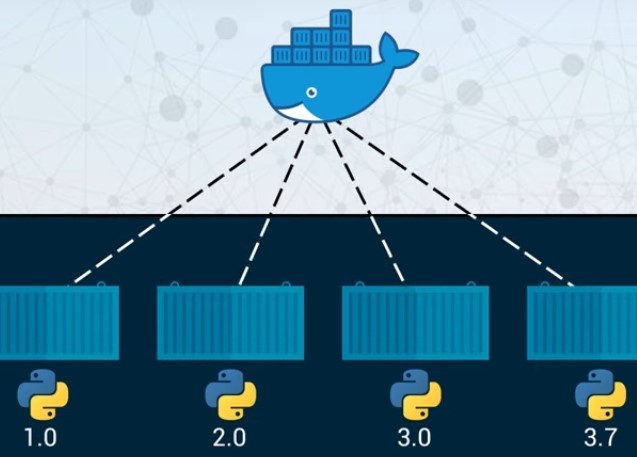
docker creates you four different containers which can have four different software. That means you can install and launch four different versions of Python on the same server using docker,
and all of these doctor containers will be isolated from each other. So that they cannot communicate within them. Now what you can do you can easily launch four different Python applications on each of the doctor container.
So this is why we exactly use docker 4. But what exactly docker does is it does not virtualize the hardware components. Instead it virtualizes the operating system.
3. Apache Maven

Apache maven is a tool which you can use to automate bills. And it is mainly used on Java based code. It can also be used on other languages. Let me tell that later first let us see what exactly maven concentrates on.
The first thing is it describes the way that software is built. The second thing is it describes the dependencies that software requires. And how does it do that it uses an XML file to do these things so it describes the software the dependencies. And the configuration in a single XML file.
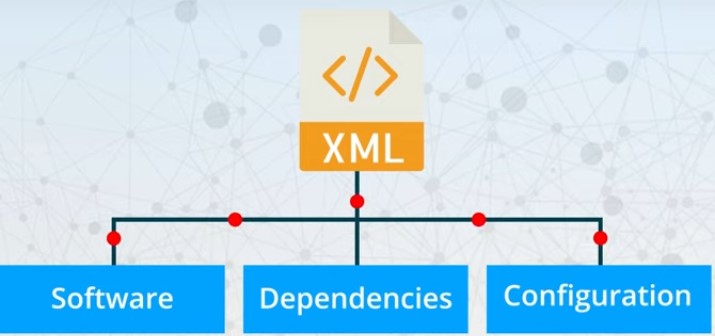
Maven can also be used on different languages like Ruby c-sharp Scala and also a few more. But the coolest part about maven is it uses a concept called project object model or POM or POM so pom is an XML file. Which describes the entire configuration of a project in a single file.
So also there are similar tools like NPM and msbuild which does the same operations like maven but NPM does it with JavaScript and msbuild does it with dotnet.
Top 10 DevOps Tools – 4 – Jenkins
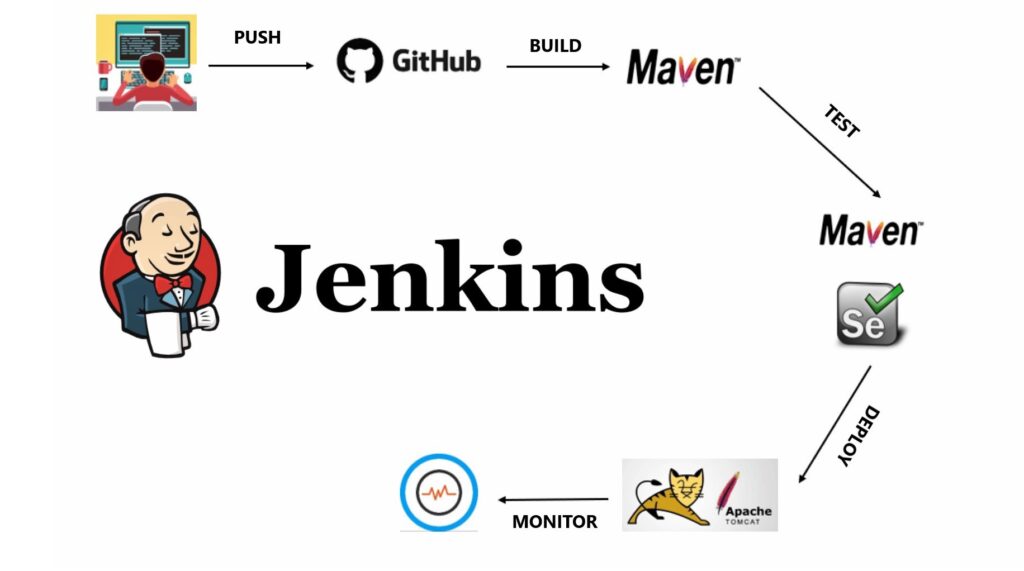
The sole purpose of Jenkins is to automate and integrate all the stages office software life cycle where we build and test the code. We can configure Jenkins as such whenever there is change made in github.
The changes will be taken by Jenkins and the build and test process will be automatically started. So this reduces the human intervention and also anyone’s dependency as this process is instantaneous.
The code will be tested and deployed simultaneously so the start feature of Jenkins is continuous integration. So that is why it is extremely helpful.
Now let us see the two reasons why Jenkins is widely used, the first reason is it is open source and the second reason is it was created by a developer to help other developers in the development lifecycle. So now let us see similar tools to Jenkins.
- Bamboo
- Teamcity
Both are not open source so bamboo comes with the atlassian ecosystem if you are using Atlassian ecosystem bamboo would be easier to integrate.
Then comes teamcity, teamcity comes integrated with a lot of DevOps tools like maven. And both of these tools are not open-source you will have to pay for them so that also their support is better.
And if you are doing an open source project Jenkins is the best option because it’s free, and it has a lot of integrations with it you can integrate Jenkins with cloud-based systems also.
Top 10 DevOps Tools – 5 – Kubernetes
Kubernetes is a container orchestration tool, so why do we need it? It is used for continuous deployment of software’s which are already built, it is extremely useful for software’s which were built on micro services architecture.
Because it is done by orchestrating multiple containers and also Kubernetes accepts docker as a containerization platform.
Kubernetes is an open-source project which is basically built by google developers and it was donated to the CNCF that is the cloud native computing foundation. Even now Google Red Hat and many organizations or active contributors for Kubernetes.
The CEO of PepsiCo Joe Beda has coated that Kubernetes is an open source project which enables teams of any sizes from a start-up to a fortune 500 company to automate scaling deploying and managing of applications on a group or cluster of server machines.
Top 10 DevOps Tools – 6 – Artifactory

Artifactory is JFrog product and it is an artifact repository manager or also called as binary repository manager so what does it mean. So basically when you store your code in github and compile and run it, it will generate some binary files.

you will store those binary files in artifactory. Artifactory stores those binary files and also combines them with dependencies, which will give you a file which is called an artifact and while it is called as a binary repository manager as we already told you.
When you compile Java it will provide you jar or war files, so those files has to be stored somewhere and artifactory is the right place to store them.
So that you can push those files to a CI CD tool and also package managers like NPM maven a NuGet can be managed using artifactory, and artifact repository managers are also considered as very useful tools.
Currently like the version control or CI CD tools.
moving on now we are going to see two different configuration management tools.
Top 10 DevOps Tools – 7 – Puppet & Ansible
The first one is puppet and the second one is ansible first let us look into a puppet to use puppet you will have to install the puppet agent in all of the servers, where you have to manage them.
So after installing puppet agent those servers are called as nodes in regards with puppet there is this master server which has all the configuration files of all these nodes.
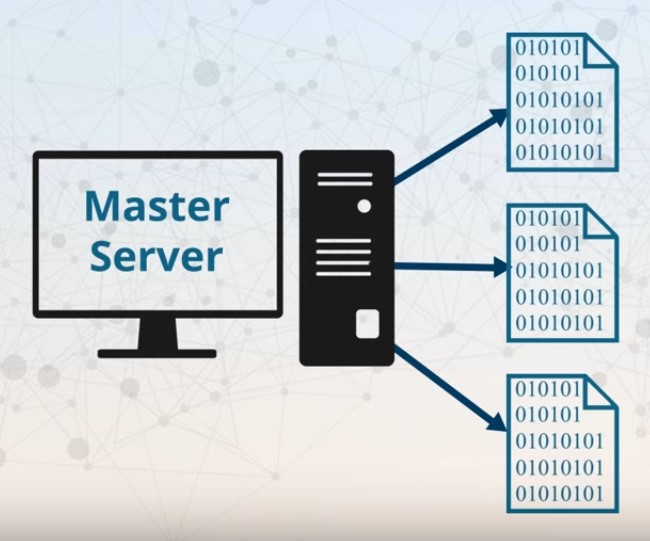
So this master server checks for any changes in configuration files at regular intervals of time and also all of these nodes check the master server for any change in their configuration files, and if they find any change they pull those changes and apply it to the puppet agent
And now let us see ansible, so ansible is very simple yet a powerful tool to manage multi-tiered applications also.
But unlike puppet ansible is very simple to setup because it does not need any agent or software to be installed on the server say either in master or slave.
Top 10 DevOps Tools – 8 – Nagios
Nagios is a monitoring tool and it lets you monitor your servers infrastructure and network. It is also said to be the best server monitoring tool in the market because of its flexibility because it allows you to do both agent lists and agent based monitoring.
It has a humongous 5,000 different add-ons which you can integrate and check metrics to get quality insights and also the concept related with Nagios is continuous monitoring.
So Nagios can be used to detect Network issues and also overcome performance issues.
Top 10 DevOps Tools – 9 – Sonarqube

sonarcube is a quality control tool that check developers code. What does it mean is it checks for the readability, the bugs and the vulnerabilities in the code which got created.
And also it is combined with the process called the continuous inspection. So whenever there is a change in your code. Sonar cube automatically executes to check the bugs inside your code. And also sonar cube can be implemented or integrated with already existing version control tools. Like github subversion mercurial as your repose and many more.
And also sonar cube can be used on many languages currently 25 plus languages like Java, Go, typescript, Python and few more and also sonar cube is widely used because of its easy integration with existing Ci / CD tools and also other DevOps tools like Jenkins, Azure, DevOps, GitHub and TeamCity.
10. Cloud tools for DevOps
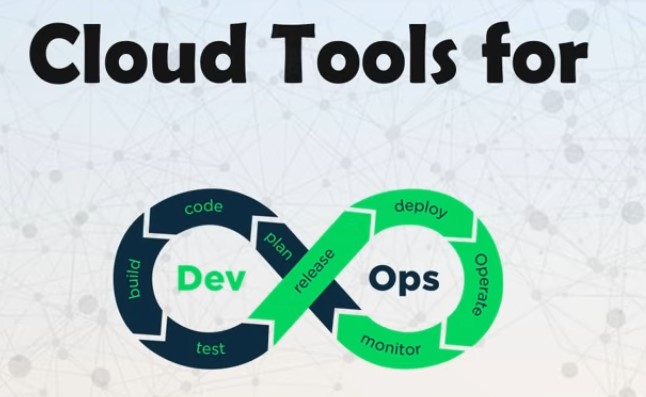
So we know AWS and Azure or top cloud service providers. But do you know they also provide quality DevOps tools to create a development lifecycle? Now let us look into that.
So first let us see what it provides us Azure has service called Azure DevOps. Which provides a services like Azure repose Azure boards, Azure pipeline, stress plants and also artifacts.
Azure repose is a version control tool as your pipelines is a CI CD tool Azure test plans is for testing as your artifact is an artifact repository manager. Finally Azure boards and dashboards can be used for monitoring.
Now coming to AWS devops it provides us four different tools which is code commit, code deploy, code pipeline and also code build code.
Commit is again a version control tool code is for building code deploy is for deploying like Kubernetes. Finally code pipeline is used to combine all these three services to create a development lifecycle. And here there is no monitoring tool but you can use AWS cloud watch for monitoring.
Azure devops are also two different DevOps services which you can use to create a development lifecycle.